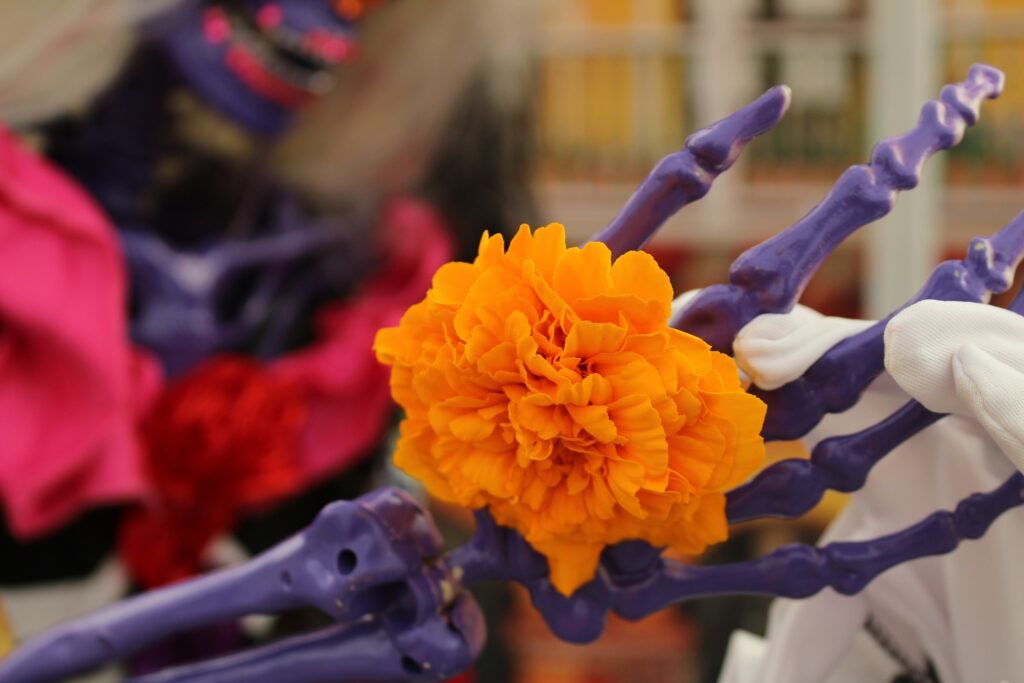
As the vibrant energy of Halloween fades, Barcelona awakens to one of its most symbolic and heartfelt celebrations: Día de Todos los Santos — All Saints’ Day — observed every November 1st. It is a time when the city slows its pace, embraces reflection, and fills its streets with the comforting scent of roasted chestnuts and sweet marzipan.
A Celebration Rooted in Memory
All Saints’ Day is one of the oldest Christian traditions, dating back to the 8th century, when the Church designated a day to honor all saints and martyrs, both known and unknown. Across Spain, it is a day of remembrance: families visit cemeteries, adorn graves with flowers — especially chrysanthemums, the symbolic flower of the season — and gather to pay tribute to those who came before them.
While the tone is reflective, it is not sorrowful. It is a day to celebrate life through memory, to connect with loved ones, and to honor continuity across generations.
The Catalan Way: La Castanyada
In Catalonia, Día de Todos los Santos merges with an equally beloved local tradition — La Castanyada — a celebration that combines remembrance with warmth and conviviality.
This autumn festival, which dates back to the 18th century, is said to have originated from old vigils where families and neighbors gathered to share food after honoring their dead.
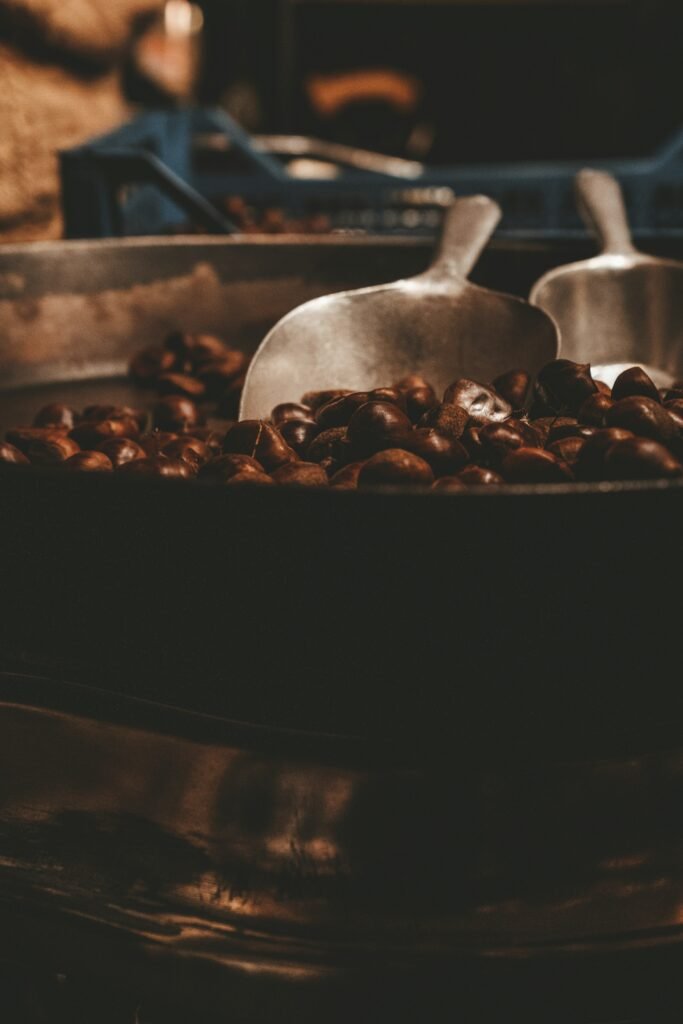
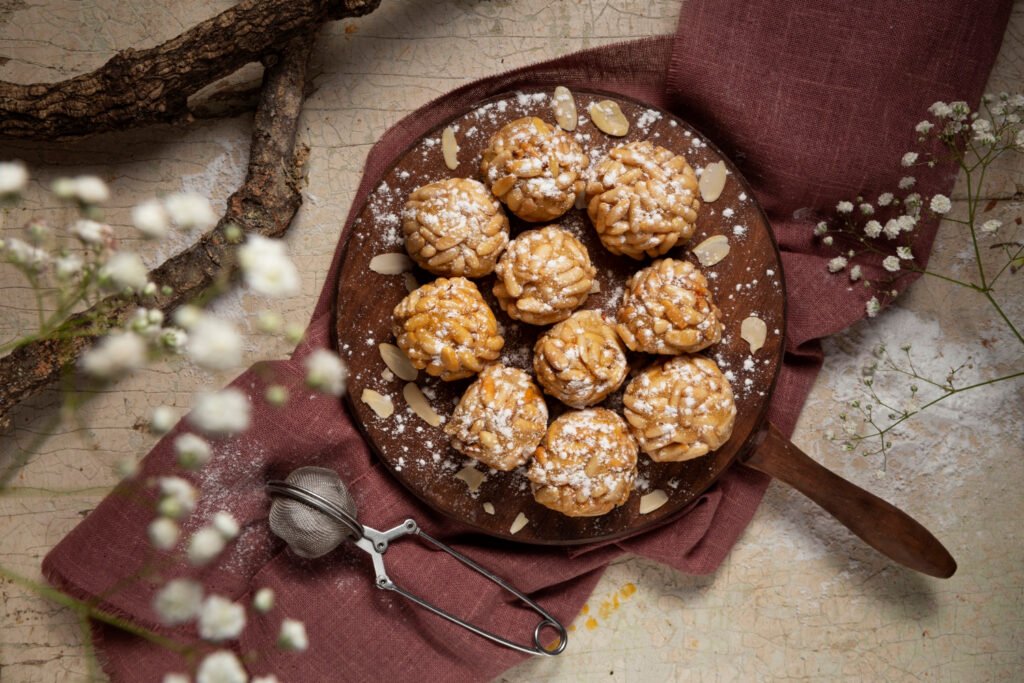
The air fills with the aroma of castanyes (roasted chestnuts), sold by the castanyeres on street corners, wrapped in simple paper cones that warm the hands on cool November days. Alongside them, there are boniatos (roasted sweet potatoes) and the delicate panellets — small, round marzipan sweets often topped with pine nuts, almonds, or coconut. These confections are traditionally homemade, their preparation a cherished family ritual that brings generations together on the eve of the celebration.
Sweet Symbols and Ancient Rituals
Each element of La Castanyada carries a story. The chestnuts and sweet potatoes symbolize the cycle of life and the comfort of home during the colder months. Panellets, whose origins trace back to offerings made for the dead centuries ago, have evolved into one of Catalonia’s most beloved confections — small, handmade, and always prepared with care and love. Families often bake them together the night before Todos los Santos, turning it into a shared ritual that brings generations around the same table.
Traditions Across Spain
Although La Castanyada is distinctly Catalan, All Saints’ Day is celebrated throughout Spain, each region adding its own flavor and local customs. In Andalusia, families gather to enjoy huesos de santo — almond sweets filled with egg yolk cream — and buñuelos de viento, light fritters often filled with cream or chocolate. In Galicia, the night before is known as Samaín, a Celtic-rooted festivity that inspired many of Spain’s Halloween customs. In Madrid, bakeries showcase colorful displays of huesos de santo and panellets, while people visit cemeteries and attend special masses in honor of the departed.
Throughout the country, food remains central — a comforting way to remember, to celebrate, and to share.
From Halloween to Heritage
While Halloween has become increasingly popular in Barcelona in recent years — especially among the younger crowd — Catalans still cherish their own traditions. Many families seamlessly blend the two: a night of costumes and fun followed by a morning of remembrance, reflection, and sweets.
Where to Experience It
If you’re in Barcelona on November 1st, wander through the city’s autumn markets, where chestnut vendors, known as castanyeres, roast their goods over open fires. Visit traditional bakeries for freshly made panellets, and enjoy the crisp air in Parc de la Ciutadella or Montjuïc, where the city feels calmer and slower — as if pausing for a collective breath of memory and gratitude.
Día de Todos los Santos is not merely a date on the calendar — it’s a reminder of continuity, tradition, and affection. In Barcelona, it becomes something even deeper: a celebration of memory and flavor, of family ties and timeless customs that turn a day of remembrance into one of the city’s most soulful and delicious traditions.